
Vehicles

VEHICLES & TRANSPORT

From cars and motorcycles to boats and bikes, discover top deals to upgrade your transport game.

Art
Deals

DAILY DEALS

Amazing bargains and special offers updated daily just for you.

Clearance

CLEARANCE

Huge discounts on overstocked items. Don't miss these incredible clearance deals!

← Scroll to see all categories
🎉
Pickeenoo becomes SnapSellGo!
Snap it. Sell it. Go.
Same platform, same mission — but a name that finally says what we really do.
snapsellgo.com →
✈ Pickeenoo Chat
Guest
Browse
Message
📞 Appel entrant

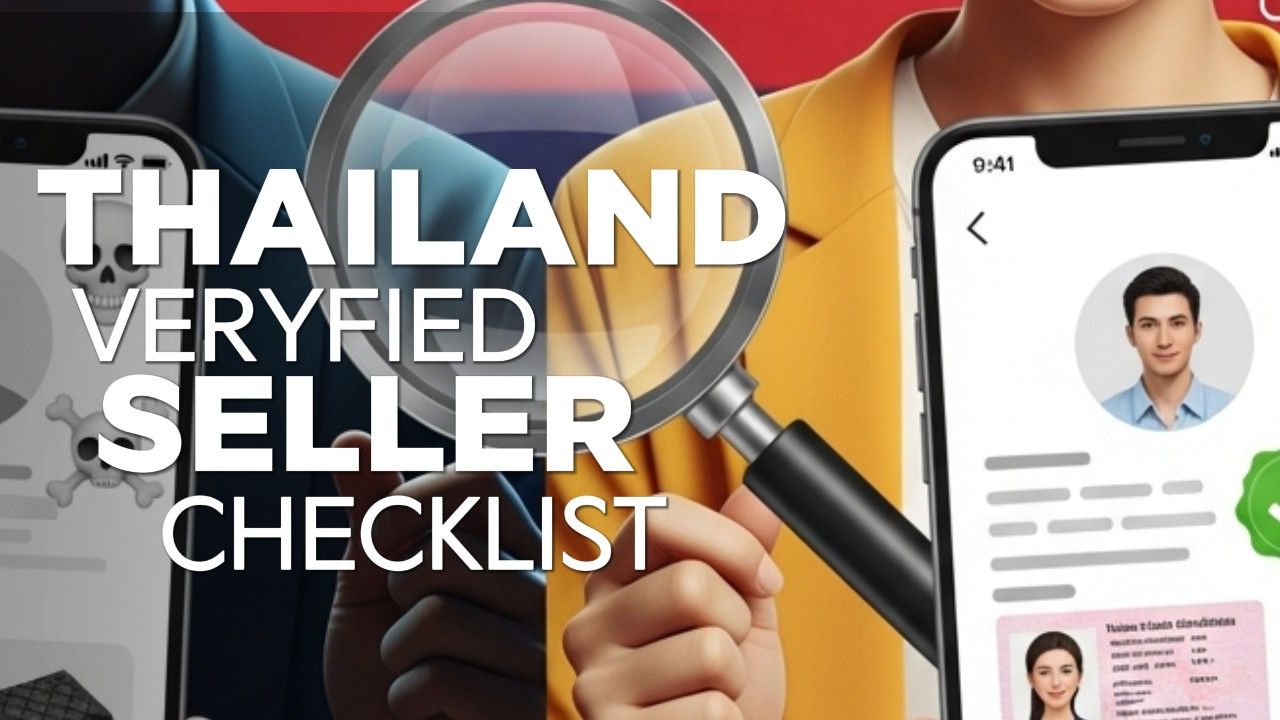
Verify Reliable Seller Thailand : Effective Techniques Guide 2026

Verify Reliable Seller Thailand : Effective Techniques Guide 2026
Featured

Stop Guessing Who’s Legit: Learn to Verify Thai Sellers Like a Pro Before You Send a Baht

Thailand in 2026 is full of great online deals – and also full of anonymous profiles, copy‑paste listings and “quick transfers” that never lead to a real product. Many expats only learn the difference the hard way, after paying a stranger by bank transfer for a scooter, phone or condo deposit that never appears. The good news: you do not need police‑level tools to protect yourself; you just need a clear, repeatable way to check who you are dealing with.

This guide gives you practical techniques to verify whether a Thai seller is reliable before you pay: how to read profiles and listing history, cross‑check names and accounts, use PromptPay and business data intelligently, and spot patterns that separate serious sellers from scammers. Whether you buy on marketplaces, social media, LINE, or directly through classifieds like SnapSellGo, you can use this checklist to massively reduce your risk.

🌶️ Table of Contents

Why Seller Verification Matters So Much in Thailand 2026

Thailand’s online economy runs on speed: you see a listing, chat for a few minutes, send a transfer or scan a QR code, and your purchase is on its way. That convenience is also exactly what scammers exploit. They rely on good photos, low prices and friendly chat to make you forget one simple question: “Who is this person or business really, and what happens if something goes wrong?”.

New regulations and marketplace rules are pushing platforms to verify business sellers better, but as an individual buyer you still need your own system – especially when buying from private profiles, in Facebook groups, on LINE, or through smaller sites. The goal is not zero risk; it is to avoid obvious traps and only take measured risks when the value is worth it.

🌶️ Spicy Tip: Treat every seller as “unknown” until they pass two or three simple checks – trust is something they earn, not something you hand out for free.

Step 1 – Quick Profile and Listing History Checks

Before you talk about money, take 1–2 minutes to look at who is behind the listing. Many scams can be avoided just by noticing that the profile is brand new, has no real content, or posts wildly different items for sale with no logic. Genuine sellers usually leave a trail: older accounts, past activity, mutual groups, or consistent types of listings.

Profile & Listing Checklist

  • Account age: older profiles with normal activity are safer than accounts created last week.
  • Real content vs emptiness: photos of real life, friends and posts are better than only “for sale” spam.
  • Listing consistency: similar categories (electronics, bikes, property) look more legit than random luxury items at huge discounts.
  • Interaction history: comments from real people, not only generic or hidden feedback.
  • Language and location: does their story about where they live / work match the listing and profile?

🌶️ Spicy Tip: If a seller’s profile looks like it was built to sell to you and no one else – no friends, no posts, only today’s listing – assume risk is high.

Step 2 – Ask for Basic Identity and Ownership Proof

For low‑value items, you might accept some risk; for higher‑value deals (phones, laptops, bikes, rent deposits), you should always see at least minimal proof that the seller is who they say and that they actually own what they are selling. Reliable sellers understand this and are usually willing to share limited but clear evidence.

What to Request (Without Being Excessive)

  • For electronics: photo of the device with today’s date or your name on a paper next to it, serial number visible if appropriate.
  • For vehicles: photos of registration book, plate, and the vehicle together; seller’s name should match or be explainable (e.g. selling for a family member).
  • For rentals: copy of title deed or condo ownership document, plus ID of the owner; if you deal with an agent, ask how they are authorised to rent.
  • For businesses: full company name, tax ID or registration number, and official contact channels (website, landline, business email).

🌶️ Spicy Tip: Phrase it as normal due diligence: “Because I’m a foreigner, I always check documents before paying – hope you understand.” Genuine sellers respect that; scammers usually disappear.

Step 3 – Check Payment Methods and Bank / PromptPay Accounts

How a seller wants to be paid tells you a lot. Solid businesses use proper payment gateways, company bank accounts or well‑known methods. Scammers prefer fast, irreversible transfers to personal accounts that are hard to trace. In Thailand, PromptPay and bank transfers are very safe technically – but only if the person receiving the money is truly legitimate.

Payment & Account Checks

  • Compare the name on the bank / PromptPay account with the name you have for the seller or company.
  • Avoid sending large amounts to accounts in someone else’s name “because the owner is busy” or “it’s my friend’s account”.
  • Be extra cautious with accounts that have no connection to the company details given (e.g. random personal account for a supposed registered shop).
  • For higher‑value deals, ask if partial COD (cash on delivery) or staged payments are possible.

🌶️ Spicy Tip: Never let a seller rush you into scanning a QR code or sending a transfer while you are still unsure who is behind the account – the queue can wait; your money cannot come back easily.

Step 4 – Verifying Companies, Shops and “Official” Sellers

Many scams use the appearance of real businesses: logos, stock photos, “brand names” in page titles. The question is not “does it look like a company?” but “does this company actually exist where Thai law expects real companies to be listed?”. Professional marketplaces and payment providers do their own merchant checks, but when you buy directly, you should still verify basic business data.

Company & Shop Verification Steps

  • Look for a proper website with a registered domain, not just a free subdomain or single page.
  • Check for real contact details: full address, phone numbers, and emails that match the domain.
  • Search the company name together with “Thailand”, “review”, “complaint”, or the city name.
  • For larger purchases, check for a Thai business registration or e‑commerce licence and make sure the name matches the payment account.
  • Be wary of pages that copy big brand names but have different URLs or wrong contact details.

🌶️ Spicy Tip: Real companies want to be found – if you cannot locate any trace of a “brand” outside one ad or page, treat it as disposable, not trustworthy.

Red-Flag Patterns That Should Make You Walk Away

Scammers may vary the story, but their behaviour follows patterns. Learn those patterns once and you will start seeing them everywhere: urgency, secrecy, inconsistent details, resistance to basic checks, and prices that make no sense compared to the rest of the market.

Key Red Flags

  • Unrealistic bargains far below normal market price “for quick sale”.
  • New profiles or pages with almost no history or interaction.
  • Seller refuses video call, refuses to meet in a public place, or keeps delaying viewings.
  • Pressure to pay immediately: “many buyers waiting”, “must book now”, “last one”.
  • Payment only to strange personal accounts, often with different names than the ones you have been given.
  • Stories that keep changing when you ask basic questions (location, condition, ownership).

🌶️ Spicy Tip: The moment you catch yourself thinking “maybe I’m over‑thinking this” about obvious red flags, pause – that feeling often means your instincts have already noticed something wrong.

Examples: Same Item, Reliable vs Risky Seller

Here is how these checks play out with typical Thailand marketplace scenarios.

Scenario Risky Seller More Reliable Seller
Used iPhone New profile, only one post, stock photos, “50% off today only”.
Wants full bank transfer to personal account, no meet‑up, refuses extra photos.
Older profile, several past sales, real‑life photos.
Shares photos of actual phone, battery health, box and receipt; willing to meet at mall and accept cash or COD.
Motorbike Seller cannot show green book, says “my friend’s name, don’t worry”.
Insists on large deposit before you see the bike.
Provides green book photo with matching plate, ID that matches name, and service records.
Open to inspection at a known shop, deposit only after viewing.
Bangkok condo rental Agent only on social media, no company name.
Asks for two months’ deposit to personal account before viewing because “I’m abroad”.
Agent gives company name, website, office address and business card.
Shows title deed and owner’s ID; deposit paid after viewing with written contract.

🌶️ Spicy Tip: When two sellers offer similar items, pick the one who is happy to be transparent – there is your real “discount”, even if their price is slightly higher.

🔥 Hot Revelation: Why Scammers Need You to Trust Feelings Instead of Facts

Did you know? Most successful scams in Thailand do not work because the victim did no checks at all – they work because the victim felt “it seems ok” and stopped checking the moment their intuition was slightly reassured.

Scammers invest heavily in the emotional side: friendly chat, shared language, quick replies, photos that look professional, and stories that sound reasonable. They want you to decide based on vibes, not verification. The easiest way to flip this is to adopt a simple rule: no matter how “nice” someone seems, they still need to pass your basic proof tests (identity, ownership, payment logic). Feelings can be faked; documents and patterns are much harder to fake consistently.

🌶️ Spicy Tips to Stay Safe Without Killing Every Deal

  • Match your verification effort to the risk: low checks for cheap items, full checklist for anything that would really hurt to lose.
  • Use one “sacrificial” small purchase to test new sellers or shops before trusting them with bigger orders.
  • Keep a simple note with your verification steps so you do not forget them when excited by a deal.
  • Walk away proudly when something fails your checks – that is a win, not a missed opportunity.

🌶️ Spicy Tip: Make it a personal habit to sleep one night before sending any large transfer to a new seller – scams hate time; good deals survive it.

Use SnapSellGo to Combine Smart Verification with Real Local Deals

Want Thailand’s Best Deals Without Playing Scam Roulette? 🌶️
Use SnapSellGo to find vehicles, electronics, furniture, rentals and services from expats and locals – then apply the verification techniques in this guide to chat with sellers, request proof, and agree on safe payment methods, so every purchase feels like a smart move, not a gamble.
Browse Verified-Ready Deals on SnapSellGo Now

🌶️ Turn “Hope This Seller Is OK” into “I’ve Checked, I’m Confident”

Once you have a simple verification routine, saying yes or no to a seller takes minutes, not hours of worrying.

Start here: see all current listings, pick a few items you might actually buy, and practice running each seller through this checklist – you will quickly feel which deals are solid and which ones you are happy to let pass.

📊 Article Information

  • Estimated Length: ~2,000–2,300 words (reading time ~8–10 minutes).
  • Last Updated: January 2026.
  • Category: Expat Life – Thailand Guides – Safety & Marketplace Skills.

Related Articles

🔒 Secure Payment Thailand 2026: Used Items | Avoid Scams Guide!
🚨 Thailand Classified Scams 2026: 10 Expat Warning Signs!
Subletting in Thailand : Legality and Practical Tips 2026

Information

Seller Ressources

All Pages