VEHICLES & TRANSPORT
From cars and motorcycles to boats and bikes, discover top deals to upgrade your transport game.
REAL ESTATE
Find your dream home, investment property, or rental space across the globe.
JOBS & SERVICES
Connect with professionals and services to meet all your business and personal needs.
Accounting & Finance
Cleaning Services
Architecture & Engineering
Art & Design
Administrative Support
Automotive Services
Customer Service
Construction & Trades
Education & Tutoring
Event Planning
Healthcare & Medical
Hospitality & Catering
IT & Tech Support
Legal Services
Marketing & Communication
Pet Services
Real Estate Services
Repair & Maintenance
Security & Surveillance
Transport & Delivery
Translation & Language
Writing & Editing
Others Jobs
View All JOBS & SERVICES
ELECTRONICS & TECH
Latest gadgets, computers, smartphones, and tech accessories at unbeatable prices.
Computers & Laptops
Cables & Connectivity
Cameras & Photography
Chargers & Batteries
Audio & Headphones
Drones & Accessories
Gaming Accessories
Gaming & Consoles
Gadgets & Innovations
Phones & Smartphones
Printers & Scanners
Screens & Monitors
Security & Surveillance
Smart Home & Automation
Smartwatches & Wearables
Software & Apps
Speakers & Home Audio
Storage & Hard Drives
Tablets & iPads
Tech Components & Parts
TVs & Video
Other
View All ELECTRONICS & TECH
FASHION & ACCESSORIES
Discover luxury brands, streetwear, and everyday fashion for the whole family.
HOME | GARDEN | LEISURE
Everything for your home, garden, hobbies and leisure activities.
HOBBIES & LEISURE
Explore hobbies, leisure activities, and creative pursuits for all ages.
PETS & ANIMALS
Everything you need for your furry, feathered, and scaled companions.
Aquariums & Fish Supplies
Bird Cages & Accessories
Collars & Leashes
Farm Animals & Supplies
Grooming & Hygiene
Health & Supplements
Litter & Waste Management
Pet Accessories
Pet Adoption & Services
Pet Beds & Furniture
Pet Bowls & Feeders
Pet Clothing & Costumes
Pet Food & Treats
Pet Toys & Entertainment
Reptile Habitats & Supplies
View All PETS & ANIMALS
ART & ANTIQUES
Discover unique art pieces, collectibles, and timeless antiques.
DAILY DEALS
Amazing bargains and special offers updated daily just for you.
CLEARANCE
Huge discounts on overstocked items. Don't miss these incredible clearance deals!
CHILDCARE
Essential products and services for babies, toddlers, and parents.
Baby Monitors
Baby Carriers
Baby Furniture
Baby Bathtubs
Baby Toys
Bathing & Hygiene
Bibs & Burp Cloths
Bottles & Feeding
Breastfeeding Accessories
Changing Mats & Tables
Cribs & Cots
Diapers & Wipes
Early Learning Toys
High Chairs
Nursery Decor
Pacifiers & Teethers
Playpens & Safety Gates
View All CHILDCARE
← Scroll to see all categories
Safe Online Shopping: Tips for Expats in Thailand 2026

GENERAL GUIDES
Hits: 297
Enjoy Thailand’s Online Deals Without Becoming “That Expat Who Got Scammed”
Thailand in 2026 is an online shopper’s paradise: marketplaces, Facebook groups, LINE shops, Instagram brands, food apps, QR payments and cross‑border platforms are everywhere. Unfortunately, so are fake stores, cloned pages, “too good to be true” deals and professional scam networks. Many expats only realise the risks after they lose money on a fake marketplace page, send a deposit for a product that never arrives, or share card details in the wrong place.
This guide gives you a clear, practical system to shop safely online as an expat in Thailand in 2026. You will learn how to spot risky sellers and fake websites, which payment methods are safest, how to use PromptPay and cash‑on‑delivery wisely, how to protect your devices and accounts, and what to do if something goes wrong. Use it as your personal checklist before you click “pay” on any Thai site or marketplace.
🌶️ Table of Contents
- Online Shopping in Thailand: The 2026 Landscape
- Step 1 – Check the Seller Before You Pay
- Step 2 – Use Safe Payment Methods (Cards, PromptPay, COD)
- Step 3 – Secure Your Devices, Wi‑Fi and Accounts
- Step 4 – Marketplaces, Social Media Shops and Red Flags
- Step 5 – What to Do If You Get Scammed
- 🌶️ Spicy Tips for Stress‑Free Online Shopping
- 🔥 Hot Revelation: Why “Too Good to Be True” Is Almost Always Exactly That
- Use Pickeenoo for Safer Buying and Selling With Real People
- 📊 Article Information
Online Shopping in Thailand: The 2026 Landscape
Thai consumers now do a huge part of their shopping online, from groceries and electronics to clothes, cars and condos. Digital payments such as cards, mobile banking apps and PromptPay QR codes are normal, and many small merchants run their entire business through social media and chat. For expats, this is convenient – but also confusing if you are not used to local platforms and payment habits.
At the same time, cybercrime and online scams have grown fast. Fake marketplace pages, cloned brand accounts, phishing messages and “deposit first, ghost later” tricks target both locals and foreigners. The goal is not to stop shopping online, but to recognise patterns and build simple routines that keep you safe most of the time.
🌶️ Spicy Tip: Treat every new online seller as “unproven” until you find at least two or three concrete reasons to trust them – not the other way around.
Step 1 – Check the Seller Before You Pay
The biggest protection you have is choosing who you buy from. Before sending money to any Thai website, LINE shop or social media seller, take a minute to check if there is any real‑world substance behind the pretty photos and discounts. Scammers rely on you making fast decisions on emotion; your goal is to slow down just enough to see the warning signs.
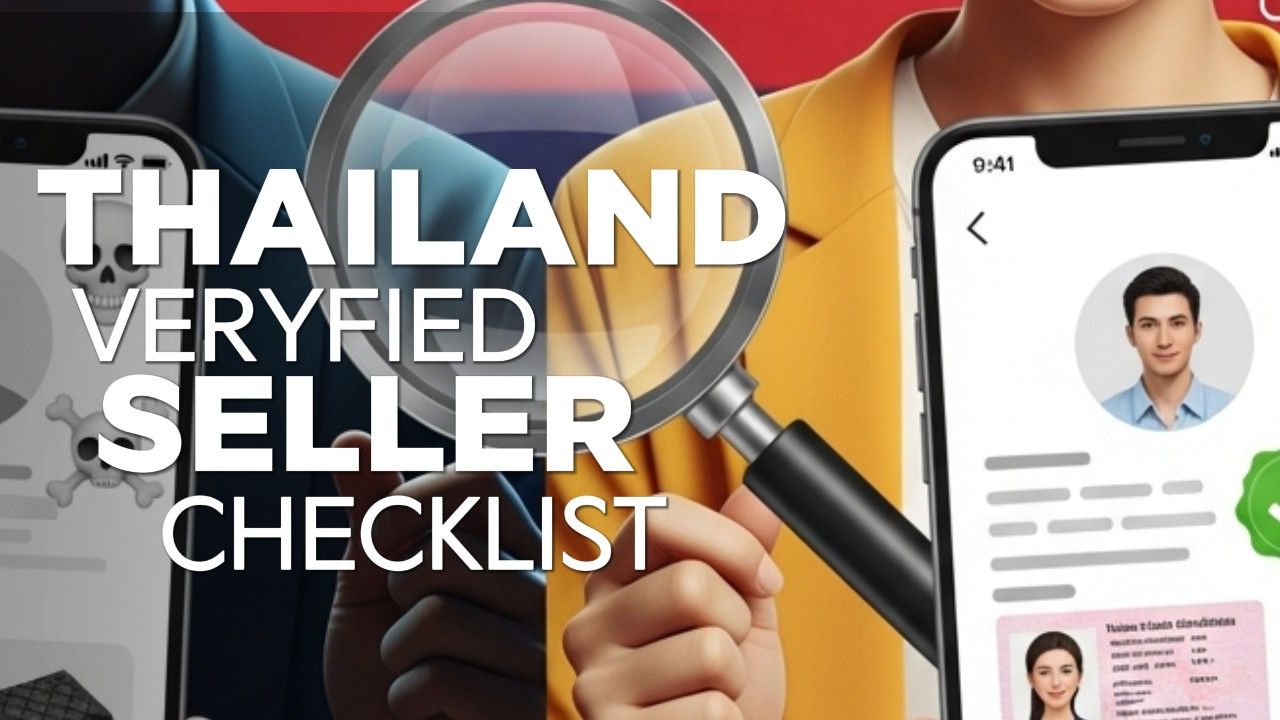
Seller Verification Checklist
- Look for a proper website or at least a complete social profile with history, not something created last week.
- Check reviews on multiple places (Google, Facebook, forums) – ignore only‑5‑star, copy‑paste reviews that look fake.
- Check for clear contact details: phone number, email, physical address, and working hours.
- Avoid sellers who only communicate via private messages and refuse to share basic business info.
- Be extra careful with deals seen only in ads that link to unknown websites.
🌶️ Spicy Tip: Copy the shop’s name into a search engine plus the word “scam” or “review” – if other people got burned, there is often a trail.
Step 2 – Use Safe Payment Methods (Cards, PromptPay, COD)
How you pay matters as much as where you buy. Some payment methods offer built‑in protection and traceability; others are almost impossible to reverse if something goes wrong. In Thailand, cards, PromptPay via bank apps and cash‑on‑delivery all have pros and cons depending on the situation.
Common Payment Methods and How Safe They Are
| Method | Pros | Risks / When to Avoid | Best Use |
|---|---|---|---|
| Credit / debit card | Chargeback options, bank protections, familiar interface. | Risk if card is stored on shady sites; watch out for phishing pages. | Reputable websites, platforms with secure checkout. |
| PromptPay QR via bank app | Instant, widely used in Thailand, no card details shared. | Transfers are hard to reverse; only send to trusted merchants or after verification. | Known businesses, in‑person purchases, or sellers with strong reputation. |
| Bank transfer (manual) | Simple, common for Thai sellers. | Least protection; scammers love one‑way transfers. | Only for sellers you trust or small amounts you can afford to lose. |
| Cash on Delivery (COD) | Pay when you receive the parcel; less risk if you can inspect first. | Not always available, sometimes extra fees; limited checking time. | Marketplace orders with COD option and clear return policies. |
Safe Payment Habits
- Enable transaction alerts on your banking app so you see every charge instantly.
- Avoid saving card details on small or unknown shop websites.
- Never send card or banking details by email, chat or screenshots.
- Use strong, unique passwords for banking and shopping accounts, with two‑factor authentication enabled.
🌶️ Spicy Tip: When you are unsure about a new shop, test with a small, low‑risk purchase before trusting them with bigger orders.
Step 3 – Secure Your Devices, Wi‑Fi and Accounts
Even if the seller is legitimate, you can still lose money if your phone or laptop is compromised. Thailand’s public Wi‑Fi and shared computers are not good places for serious online banking or shopping. Take basic steps to protect your devices and connections so that your details are not stolen in the background.
Device & Connection Safety Checklist
- Keep your phone and computer updated with the latest security patches.
- Use reputable antivirus or security apps, especially if you install many third‑party apps.
- Avoid entering card or banking details when you are on public or unsecured Wi‑Fi.
- Log out of shared devices and never save passwords on a computer that is not yours.
- Do not install random APKs or apps from links in chat; use official app stores.
🌶️ Spicy Tip: If you must shop while outside, use your mobile data or a trusted hotspot instead of free Wi‑Fi with unknown security.
Step 4 – Marketplaces, Social Media Shops and Red Flags
Many expats in Thailand get scammed not on big e‑commerce sites, but on social media or in informal marketplaces where rules are looser. A typical pattern: a new page sells popular items at a big discount, asks for full payment in advance via transfer, then disappears after collecting enough orders. Another classic: “The seller is abroad, please pay deposit to reserve” and then silence.
To stay safe, you need to differentiate between established sellers using social media as a storefront and anonymous pages created solely to collect quick deposits. The difference is visible in age, content, interactions and transparency.
Common Red Flags
- Profile or page created very recently, with little or no posting history.
- Only stock photos, no real pictures from the seller’s own camera.
- Comments that look fake, or all negative comments suddenly disabled.
- Urgent pressure: “pay now”, “last piece”, “today only”, especially with big discounts.
- Seller refuses meet‑up, video call, or any form of verification for higher‑value items.
🌶️ Spicy Tip: For expensive items from private sellers, insist on meeting in a public place (or video call plus COD or escrow‑like arrangements) – “no meet, no money” is a good rule for big purchases.
Step 5 – What to Do If You Get Scammed
Even with good habits, things can go wrong. If you realise you have paid a scammer or entered your details on a fake site, acting fast can sometimes limit the damage. Do not feel ashamed – online fraud is designed to trick smart people too – but do move quickly.
Immediate Actions to Take
- Take screenshots of everything: chats, ads, payment confirmations, profile pages.
- Contact your bank or card issuer immediately to report the transaction and ask about blocking, reversing or monitoring your account.
- Change passwords for affected accounts and enable two‑factor authentication.
- Consider filing a report at your local police station, especially for larger amounts, bringing all your evidence.
- Warn others in relevant expat or local groups if appropriate, without doxxing innocent people by mistake.
🌶️ Spicy Tip: Create a small “online safety” folder where you keep key bank contact numbers, so you are not searching for them in a panic when something feels wrong.
🔥 Hot Revelation: Why “Too Good to Be True” Is Almost Always Exactly That
Did you know? Many sophisticated scam networks in Thailand and the region operate like real businesses – with customer service scripts, fake tracking numbers, and high‑quality product photos – but their entire profit model depends on buyers ignoring one simple rule: real products rarely sell far below consistent market prices without a clear reason.
When you see a high‑demand item at a huge discount, limited‑time pressure, and a seller you have never heard of demanding full payment upfront, you are not seeing a special opportunity, you are seeing bait. Experienced shoppers do not ask “Is this real?” – they ask “Why would a real seller offer this?” and walk away when the logic does not add up. Your best defence is not paranoia, it is healthy scepticism about deals that seem magically better than what everyone else offers.
🌶️ Spicy Tips for Stress‑Free Online Shopping
- Keep an “online shopping budget” and avoid impulse buys pushed by ads or flash sales.
- Favour platforms and sellers that offer clear return policies and support in English or your language.
- For big purchases, search for the same product on multiple platforms to understand normal price ranges.
- Trust your gut: if a conversation or checkout page feels off, stop and re‑check before paying.
🌶️ Spicy Tip: Make a simple personal rule: “I will never send large amounts to new sellers without at least two independent signs they are legitimate” – then stick to it, even when you really want the item.
Use Pickeenoo for Safer Buying and Selling With Real People
Want the Convenience of Thailand’s Online Market Without the Scam Anxiety? 🌶️
Use Pickeenoo to buy and sell with expats and locals who value their reputation, using clear listings, realistic prices and direct communication – so you can find vehicles, electronics, furniture, rentals and services without diving blindly into random social media ads and mystery bank accounts.
Browse Safe Deals and Post Your Own on Pickeenoo Now
🌶️ Turn Online Shopping in Thailand from a Gamble into a System
Once you have a simple checklist for checking sellers, payments and devices, online shopping becomes fun again instead of stressful.
Start here: see all current listings, practice applying these safety rules on small purchases, and build your confidence step by step before you move to bigger online buys in Thailand.
📊 Article Information
- Estimated Length: ~2,000–2,300 words (reading time ~8–10 minutes).
- Last Updated: January 2026.
- Category: Expat Life – Thailand Guides – Money, Safety & Online Life.